

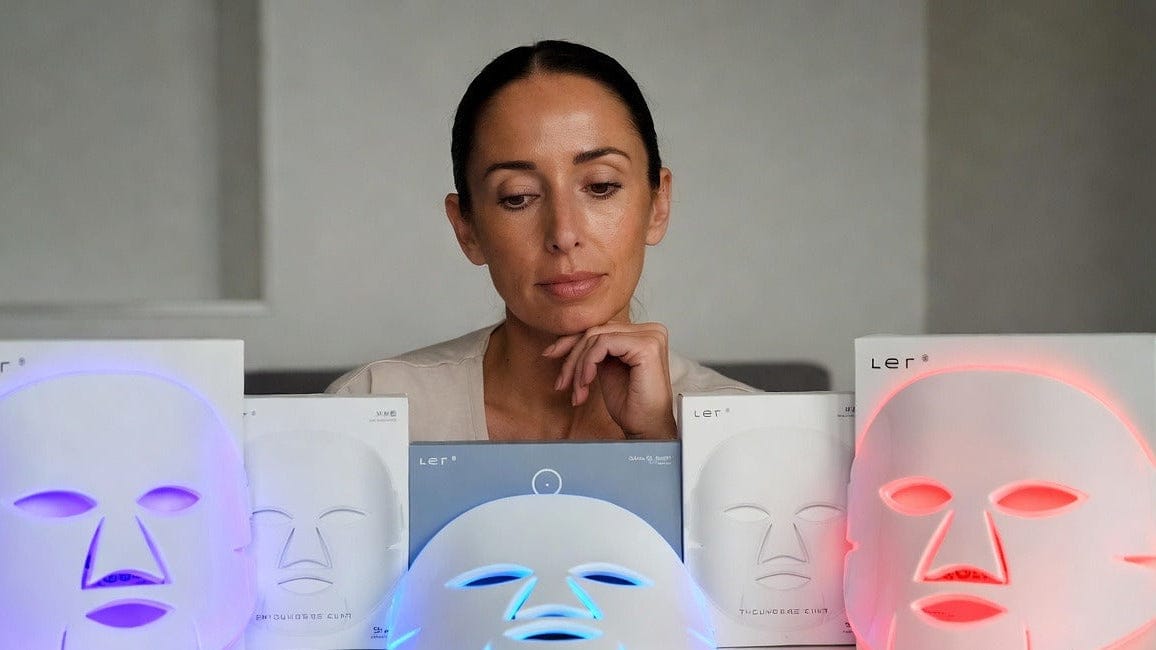
Is Red Light Therapy a Hoax? What the Evidence Actually Shows
The short answer:
Red light therapy itself isn't a hoax - it's one of the more extensively studied non-invasive skin treatments available, with decades of peer-reviewed research behind the underlying science. The doubt usually comes from a real and reasonable place: a lot of cheap, underpowered devices on the market genuinely don't work well, and that's fair to be skeptical of.
If you've typed "is red light therapy a hoax" into Google recently, you're not alone - searches for that exact question have climbed more than five-fold over the past year. That's not a fringe concern. It's a reasonable question from people who've either been burned by a device that did nothing, or who are tired of skincare claims that don't hold up. Let's actually look at it properly.
Where the skepticism comes from - and why it's fair
The red light therapy market has genuinely earned some of this doubt. Once a technology becomes trendy, the market fills with low-cost versions built to hit a price point rather than a clinical standard:
Too few LEDs, wavelengths that drift outside the ranges shown to work, and irradiance too low to trigger a real cellular response. Someone who buys one of these, uses it for a week, and sees nothing is drawing a completely reasonable conclusion from their own experience - even though the conclusion about the technology itself is wrong.
The other common source of doubt is expectation.
Red light therapy isn't a dermal filler or a laser resurfacing session - it doesn't produce a dramatic, immediate transformation. It works by supporting a biological process (collagen synthesis) that happens gradually. Expecting overnight results from a device marketed with a single blurry before-and-after photo is where a lot of disappointment - and understandable cynicism - comes from.

© 2026 Souleir. All rights reserved. Images and content may not be reproduced, copied, or used without written permission.
What the actual research shows
Photobiomodulation - the formal name for red and near-infrared light therapy - has been studied in clinical and research settings for decades, well beyond the current consumer skincare trend.
The mechanism is well characterised:
Red and near-infrared light are absorbed by mitochondria in skin cells, increasing ATP production and stimulating collagen synthesis in fibroblasts.

© 2026 Souleir. All rights reserved. Images and content may not be reproduced, copied, or used without written permission.
A 2023 study published in Skin Research and Technology recorded a 47.7% increase in dermal density after 12 weeks of consistent treatment, measured by ultrasound rather than self-reported impression. That's the kind of independently measurable outcome that distinguishes real evidence from marketing claims - and it's also a fair test of whether a device is actually doing anything: results that build steadily over weeks, not miraculously overnight.
What separates a device that works from one that doesn't
| What to check | Why it matters |
|---|---|
| Regulatory registration | A device registered with the TGA (Australia) as a medical device has met documented safety and manufacturing standards - unregulated devices haven't. |
| Wavelength accuracy | The research is specific to certain wavelength ranges. A device using the wrong wavelength isn't delivering what the studies tested. |
| Irradiance (light intensity) | Too low, and there's simply not enough light energy reaching the skin to trigger a cellular response, regardless of session length. |
| Realistic timeframe | Genuine collagen-level change builds over 4–12 weeks of consistent use - a legitimate device won't promise results in days. |
Are there real dangers?
Red light therapy is non-invasive and UV-free, and serious adverse effects are rare in the research literature. That said, it follows a biphasic dose-response: too little light does little, an optimal dose produces the best results, and excessive exposure can actually reduce the benefit rather than increase it.
Mild, temporary flushing right after a session is normal and reflects increased circulation. If you're pregnant, breastfeeding, or managing a medical condition, check with your healthcare provider before starting.
For a full breakdown of safety considerations, see our dedicated safety guide.
Where this leaves you
The honest answer is:
The science isn't the hoax - but plenty of the products claiming to use it are underwhelming, and it's entirely reasonable to be skeptical of a category with that much noise in it. The way through that isn't blind trust or blanket dismissal - it's checking the specifics: registration, wavelength, irradiance, and realistic expectations.
Souleir's Skin Restore Complete System is TGA registered and delivers four clinically studied wavelengths (including red and near-infrared) across face, neck, and chest, built to the standard the research is actually about - not the standard a $40 gadget is aiming for.
SHOP THE LED SKIN RESTORE SYSTEM $799 →
Compare devices properly in our full buyer's guide →
Frequently asked questions
Is red light therapy a hoax?
No. It's backed by decades of peer-reviewed research and used in clinical settings. Most skepticism traces back to underpowered, unregulated consumer devices rather than the science itself.
Why do some people think red light therapy doesn't work?
Usually because of a low-quality device with insufficient irradiance, or expecting immediate results from a process that builds gradually over weeks.
Are there dangers associated with red light therapy?
It's non-invasive and UV-free, with mild temporary flushing being the most common effect. Those who are pregnant or managing a medical condition should check with their healthcare provider first.
Can you get too much red light therapy?
Yes, in principle - it follows a biphasic dose-response, so more isn't always better. Sticking to the recommended session length and frequency avoids this.
This article reflects published research on red and near-infrared light therapy for skin. Individual results vary. The Souleir Skin Restore Complete System is TGA registered for its stated skin indications. Always consult your healthcare provider before starting any new treatment if you are pregnant, breastfeeding, or managing a medical condition.

Written by Therese Cassar


Leave a comment
This site is protected by hCaptcha and the hCaptcha Privacy Policy and Terms of Service apply.