

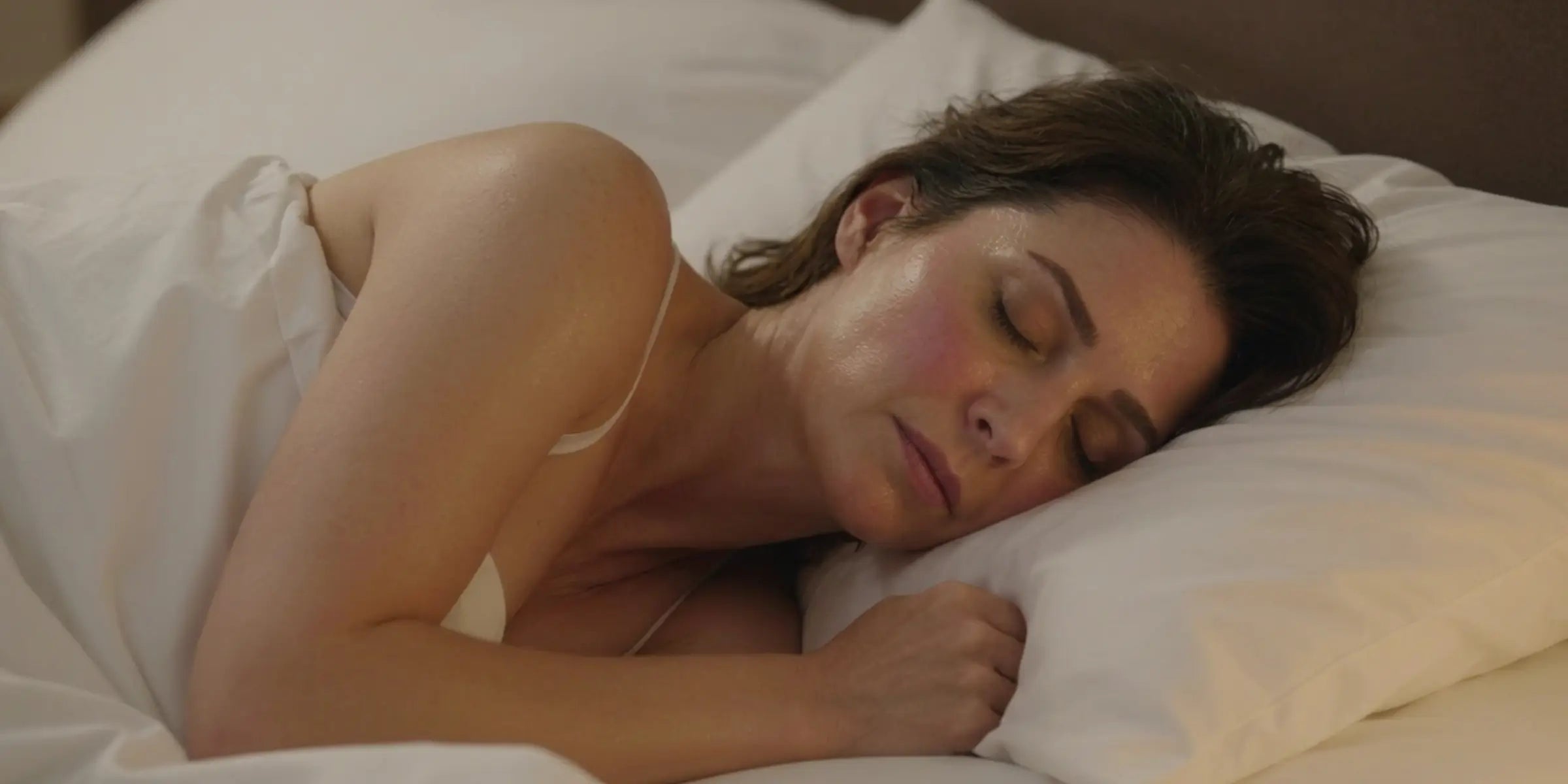
Does red light therapy help with menopause?
The short answer:
Red light therapy doesn't treat menopause or perimenopause as a hormonal condition - but it can meaningfully support the skin changes that come with it. As ooestrogen declines, collagen production slows down. Red and near-infrared light stimulate the same cellular pathway that ooestrogen once helped regulate, supporting collagen density and skin firmness without any systemic hormonal effect.
Somewhere in your late thirties or early forties, skin starts doing something it never used to do: it stops bouncing back. A late night used to cost you a slightly duller morning. Now it costs you three days. The moisturiser that used to be enough, isn't. None of this is you doing something wrong. It's ooestrogen - and understanding exactly what it was doing for your skin all along is the first step to knowing what will actually help.
Why perimenopause changes your skin in the first place
Ooestrogen isn't just a reproductive hormone - it's one of the primary regulators of collagen production, skin thickness, and moisture retention. Research has linked declining ooestrogen to measurable drops in skin collagen content, particularly in the years immediately around perimenopause. That's why skin changes during this window can feel sudden: firmness, density, and hydration were being propped up by a hormone that's now doing less of that work.
This shows up as thinner-feeling skin, more visible fine lines, a duller complexion, and - often overlooked - visible ageing across the neck and chest, an area most skincare routines never touch.
What's actually happening at a cellular level
Red and near-infrared light work through a process called photobiomodulation. Here's the mechanism, in plain terms:
Red light (630–660nm) is absorbed by mitochondria inside fibroblast cells - the cells responsible for producing collagen. This absorption triggers increased ATP (cellular energy) production, which in turn stimulates collagen type I synthesis. In effect, it's providing a cellular nudge toward the same collagen-building activity that ooestrogen used to help drive.
Near-infrared light (850nm) penetrates further into the deep dermis, where it helps calm the low-grade inflammation that often characterises perimenopausal skin and can worsen sensitivity and redness.
A 2023 study published in Skin Research and Technology measured a 47.7% increase in dermal density after 12 weeks of consistent LED treatment, confirmed by ultrasound imaging - one of the more concrete, measurable results in this space rather than a subjective "looks better" claim.
|
BEFORE
|
AFTER
|


© 2026 Souleir. All Rights Reserved.
The before-and-after images displayed above represent real results from genuine Souleir users. Individual skin responses to LED light therapy may vary based on skin type, consistency of use, and pre-existing conditions. These images are the exclusive intellectual property of Souleir and are fully protected under Australian and international copyright laws. Any unauthorised reproduction, downloading, modification, or distribution of these images for commercial use, competitor marketing, or third-party platforms is strictly prohibited and subject to immediate legal enforcement.
SHOP THE LED SKIN RESTORE SYSTEM $799 →
Does red light therapy increase ooestrogen?
No - and it's worth answering this directly, because it's a genuinely common question. Red light therapy does not raise, lower, or otherwise modulate oestrogen or any other systemic hormone.
Its effect is local: it acts on the mitochondria of skin cells themselves. Think of it less as "hormone therapy for skin" and more as giving skin cells a way to keep doing collagen production even while circulating ooestrogen is doing less of that work for them. That distinction matters - it's a cosmetic, cellular-level effect, not an endocrine one.

What this looks like day to day
A single 10-minute session, done consistently - most people use it daily or close to it - targets face, neck, and chest together, since hormonal skin changes rarely stop neatly at the jawline. Visible changes are typically reported from around 4 weeks of regular use, with the more substantial collagen-density changes (like the 47.7% figure above) building over 12 weeks.

© 2026 Souleir. All Rights Reserved.
These images are the exclusive intellectual property of Souleir and are fully protected under Australian and international copyright laws. Any unauthorised reproduction, downloading, modification, or distribution of these images for commercial use, competitor marketing, or third-party platforms is strictly prohibited and subject to immediate legal enforcement.
A note on safety and what this isn't
Red light therapy is non-invasive and doesn't involve UV exposure. Mild, temporary flushing immediately after a session is normal and reflects increased circulation, not irritation. If you're pregnant or breastfeeding, or managing a medical condition, speak with your healthcare provider before starting any new treatment - this applies to LED therapy the same as anything else. For the full safety picture, including who should take extra care, read our dedicated safety guide.
It's also worth being clear about what this isn't: red light therapy is not a treatment for perimenopause or menopause as a hormonal condition, and it won't address symptoms like hot flushes, sleep disruption, or mood changes. It's specifically a support for the skin-level effects of hormonal change - not a substitute for medical care around perimenopause more broadly.
Where the Skin Restore Complete System fits in
Souleir's Skin Restore Complete System is TGA registered and delivers red and near-infrared wavelengths (alongside blue and yellow) across face, neck, and chest in a single 10-minute session - the same areas perimenopausal skin changes tend to show up together. It's designed to be used daily, at home, without the cost or scheduling of repeated clinic visits.
A single in-clinic LED session in Australia typically runs $80–150. At $799 (or $679 for subscribers making their first with Souleir), the device pays for itself against clinic pricing within a handful of sessions - while giving you a daily tool for a skin transition that, realistically, isn't a one-off event.
SHOP THE LED SKIN RESTORE SYSTEM $799 →
Frequently asked questions
Does red light therapy help with perimenopause?
It doesn't treat perimenopause itself, but it supports the skin-level effects of it - collagen density, firmness, and texture - by stimulating the same cellular pathway ooestrogen once helped drive.
Does red light therapy increase oestrogen?
No. It has no effect on systemic hormone levels. It works locally on skin cells, independent of the endocrine system.
What does red light therapy do for perimenopause skin specifically?
It supports collagen synthesis (via red light) and helps calm low-grade inflammation (via near-infrared), addressing two of the most common perimenopausal skin changes at once.
How do you use red light therapy for perimenopause skin?
A daily 10-minute session on clean, product-free skin. Most people notice visible changes from around 4 weeks, with fuller collagen-density improvements building over 12 weeks.
Is red light therapy good for perimenopause skin changes?
For many people, yes - as a non-invasive way to support collagen and density during a stage when the skin is doing that job with less hormonal help. It isn't a substitute for medical care around perimenopause symptoms more broadly.
This article discusses cosmetic, skin-level effects associated with hormonal changes during perimenopause and menopause. The Souleir Skin Restore Complete System is TGA registered for its stated skin indications and is not a treatment for menopause, perimenopause, or any hormonal condition. It has not been evaluated for symptoms beyond the skin. Always consult your healthcare provider regarding hormonal symptoms, and before starting any new treatment if you are pregnant, breastfeeding, or managing a medical condition.

Written by Therese Cassar


Leave a comment
This site is protected by hCaptcha and the hCaptcha Privacy Policy and Terms of Service apply.