

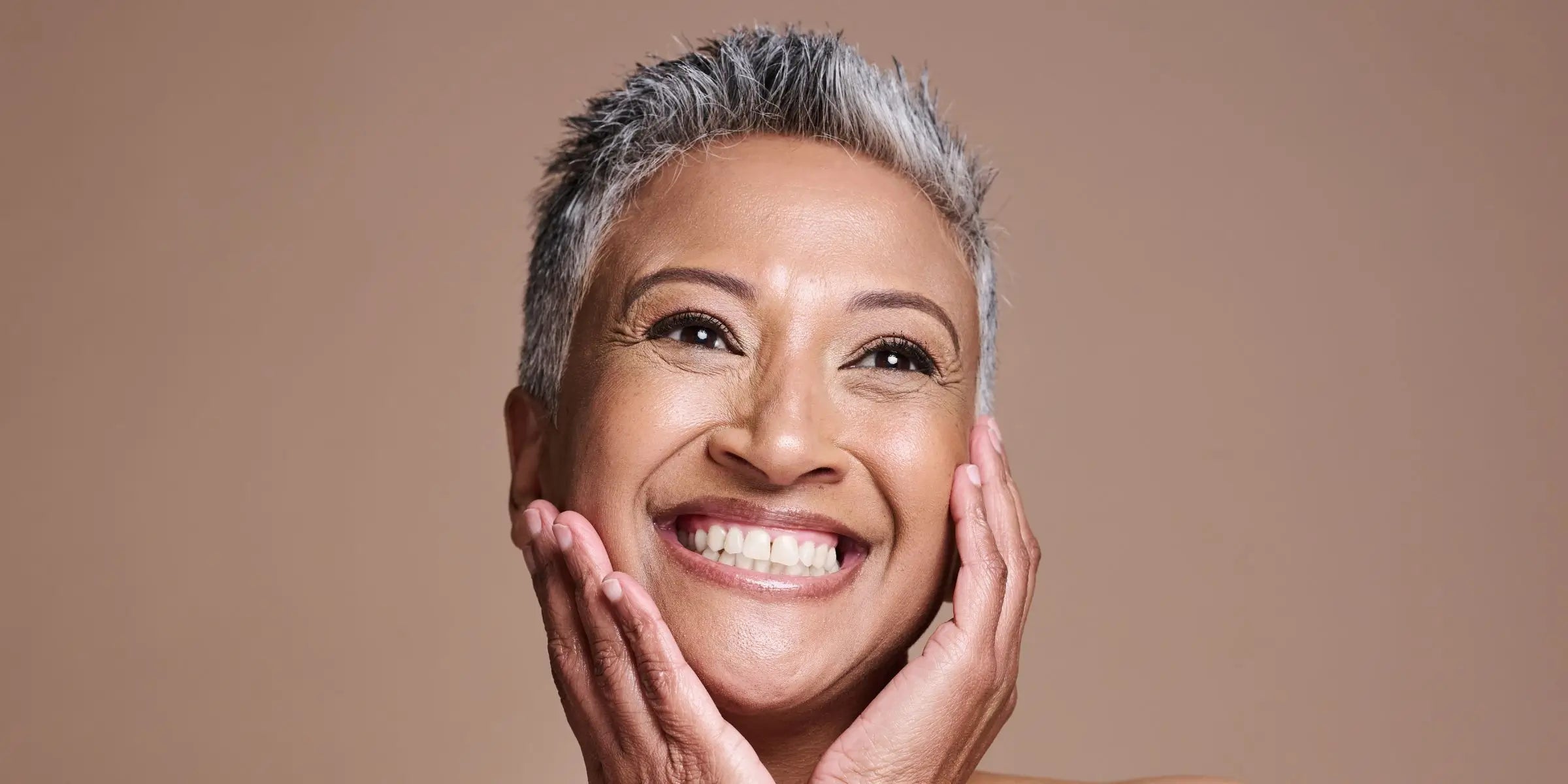
Red Light Therapy and Perimenopause: What's Actually Happening to Your Skin
At some point in your 40s, your skin stops responding the way it used to.
The moisturiser you've used for years suddenly feels inadequate. Your face looks drier, duller, or more fragile. Fine lines appear faster. Redness flares more easily. Your skin feels thinner — almost like it's lost a layer of resilience it once had.
You're not imagining it. And it's not simply about getting older.
What's happening is hormonal. And most skincare — even expensive, well-formulated skincare — is not designed to address it at the level where it actually originates.
What perimenopause actually does to your skin
Perimenopause typically begins in the mid-to-late 40s, though it can start earlier. It is the transitional phase before menopause, during which oestrogen levels begin to fluctuate and gradually decline.
Oestrogen is not merely a reproductive hormone. It plays a critical structural role in skin health:
Collagen production
Oestrogen directly stimulates fibroblasts — the cells responsible for producing collagen and elastin. Research suggests women lose approximately 30% of their skin collagen in the first five years after menopause, with an accelerated rate of loss beginning during perimenopause. This is not a gradual, imperceptible change. For many women it is visible and rapid.
Skin hydration
Oestrogen supports hyaluronic acid synthesis and the skin's ability to retain moisture. As levels drop, transepidermal water loss increases — the skin dries out faster, regardless of how much topical moisturiser is applied.
Inflammation regulation
Oestrogen has anti-inflammatory effects. Its decline creates a pro-inflammatory environment in the skin. For women already prone to redness, rosacea, or sensitivity, perimenopause can significantly worsen these conditions. For others, new sensitivities emerge that had no precedent in earlier life.
Wound healing and cell turnover
Oestrogen accelerates skin cell renewal. Without it, skin heals more slowly and appears less luminous. The dullness many women associate with ageing is partly a slowdown in the rate at which the skin renews itself.
Why most skincare doesn't reach the problem
Topical skincare — serums, creams, oils — works at the epidermis, the outermost layer of skin. The collagen loss happening in perimenopause occurs in the dermis, the deeper structural layer. Most ingredients, including retinol and vitamin C, have limited penetration to the dermis. They can support surface-level improvements, and they are worth using. But they are not reaching the origin of the problem.
This is why so many women in perimenopause find that routines that once worked stop producing results. The cause has shifted from surface-level factors to a deeper, systemic one.
Where red light therapy fits
Red and near-infrared light
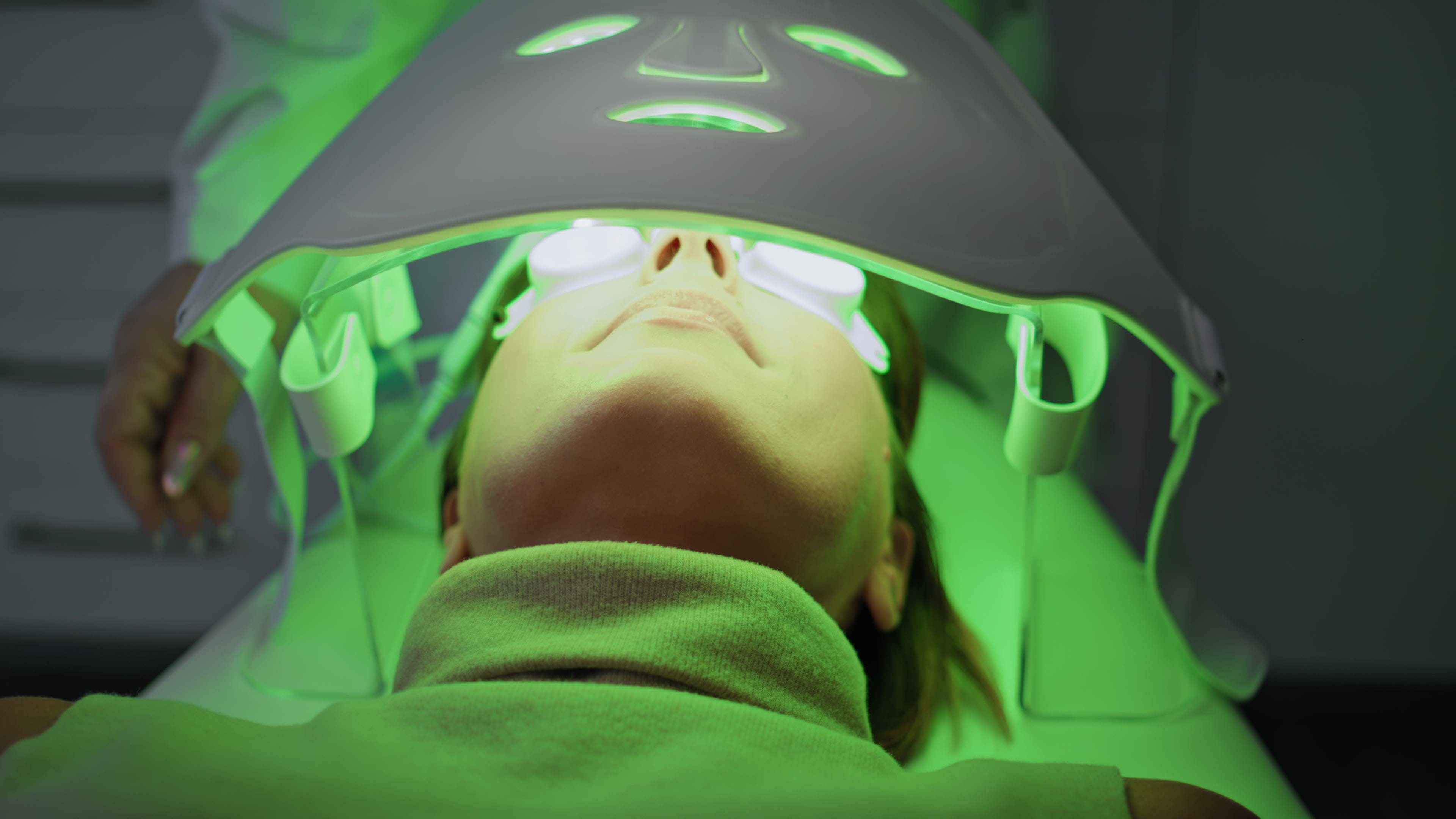
At wavelengths between 630nm and 850nm — penetrates beyond the epidermis into the dermis, where it is absorbed by the mitochondria of skin cells.
The mechanism relevant to perimenopause skin is this: when mitochondria absorb red and near-infrared light, they produce more ATP (cellular energy). With more energy available, cells function more efficiently — including fibroblasts, which produce collagen and elastin.
In other words, red light therapy does not add collagen from the outside. It stimulates your skin's own cells to produce more of it from within. This is a meaningful distinction from topical treatment.
The clinical evidence supporting this mechanism is well-established. Multiple peer-reviewed studies have demonstrated measurable increases in collagen density and skin elasticity following consistent LED therapy. More recently, research has begun examining red light therapy's specific applications in hormonal skin ageing — including a growing body of evidence that it can reduce the inflammatory markers elevated in post-oestrogen skin.
What the research says about red light therapy and menopause
A 2023 review in Photobiomodulation, Photomedicine, and Laser Surgery examined the role of photobiomodulation in managing skin changes associated with hormonal ageing, noting significant improvements in skin elasticity, hydration, and collagen density among women in perimenopause and post-menopause. Researchers noted that the mechanism — mitochondrial stimulation leading to fibroblast activation — directly addresses the collagen deficits driven by oestrogen decline.
Additional studies examining red light therapy and hormonal health suggest it may also modulate levels of systemic inflammation — a driver of the redness, sensitivity, and reactive skin many women experience as oestrogen falls.
It is important to be clear: red light therapy does not replace oestrogen, and it is not a treatment for perimenopause as a medical condition. For significant hormonal symptoms, speaking with a GP or gynaecologist about hormone therapy is the appropriate path. What red light therapy does address is the skin — providing direct cellular support for the collagen production, inflammation control, and tissue repair that declining oestrogen was previously maintaining.
What perimenopausal women typically experience
Women in their 40s and 50s using the Souleir LED Skin Restore Mask consistently over 2–12 weeks most commonly report:
-
Firmer-feeling skin, particularly along the jawline and cheeks where collagen loss is most visible
-
Reduced dryness and improved skin texture — less crepey, more hydrated in appearance
-
Calmer, less reactive skin — fewer redness flares and reduced sensitivity
-
Gradual softening of fine lines and expression lines
-
A more even, luminous skin tone
These results are cumulative. The skin is rebuilding from a cellular level, which takes time. The women who see the most significant changes are those who use it consistently.
How to use red light therapy during perimenopause
Frequency:
Daily use is ideal. At minimum, 4–5 sessions per week to maintain consistent cellular stimulation.
Duration:
10–20 minutes per session. The Souleir LED Skin Restore Mask is designed to be used on clean, product-free skin before applying serums and moisturiser — the light penetrates more effectively without skincare acting as a barrier.
Complement, don't replace:
Red light therapy works best as part of a considered routine. Pair it with a peptide serum (which supports collagen synthesis from the outside), a quality SPF daily (oestrogen decline increases UV sensitivity), and a hydrating moisturiser applied immediately after each session, when skin is primed to absorb.
Wavelength selection:
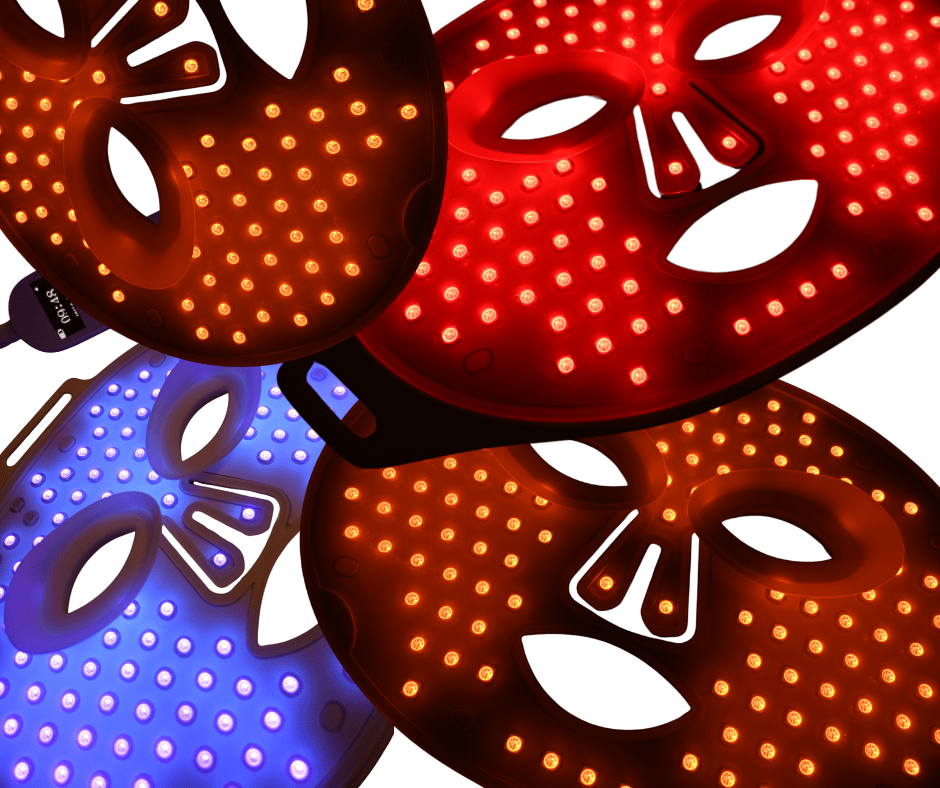
For perimenopausal skin concerns — collagen loss, fine lines, inflammation, and dryness — the red (630–700nm) and near-infrared (700–1200nm) modes are most relevant. The Souleir LED Skin Restore Mask delivers both, along with blue light for women dealing with concurrent hormonal breakouts.
A note on managing expectations
No device, treatment, or routine will fully replicate what oestrogen was doing. Perimenopause is a real biological transition with real effects on the skin, and managing it requires a combination of approaches.
What red light therapy offers is direct, evidence-backed support for the cellular processes most disrupted by that transition — collagen synthesis, inflammation regulation, and tissue repair. It works at the level where the problem originates, rather than sitting on top of it.
For women who have tried countless products and felt disappointed, that difference matters.
About the Souleir LED Skin Restore Mask LED Therapy Mask
TGA-approved and built specifically for the demands of everyday at-home use. 488 LEDs across four clinically relevant wavelengths. Flexible food-grade silicone designed to maintain consistent contact across the face, neck, and décolletage — the areas where perimenopausal skin changes are most visible.
One device. Ten minutes a day. Built for the long game.
Shop the Souleir LED Skin Restore Therapy Mask →
This article is for informational purposes only and does not constitute medical advice. If you are experiencing significant perimenopausal symptoms, please consult a qualified healthcare professional.

Written by Therese Cassar

Leave a comment
This site is protected by hCaptcha and the hCaptcha Privacy Policy and Terms of Service apply.