

Wide Awake at 3am: Building a Sleep Hygiene Routine That Actually Works in Perimenopause
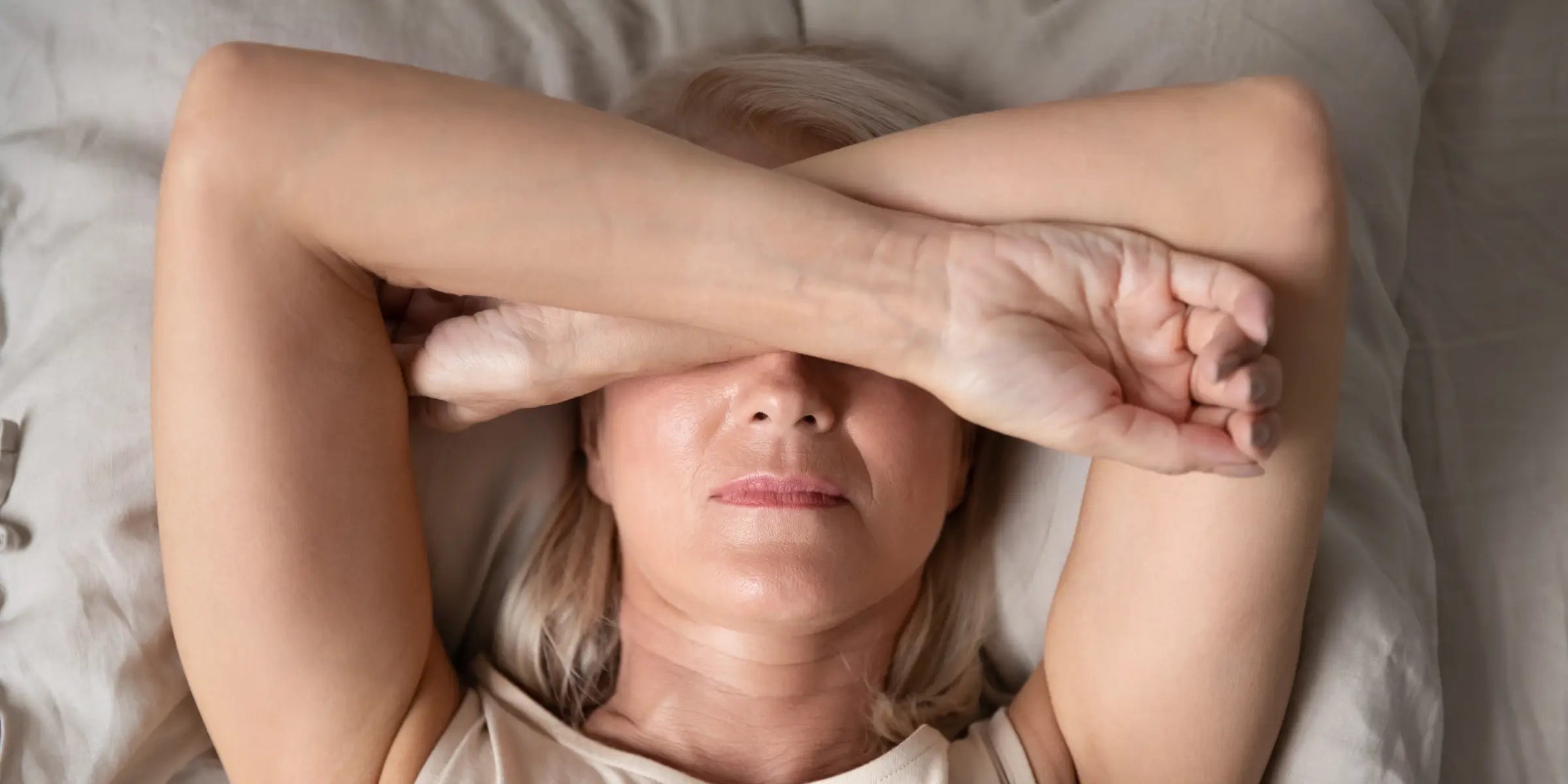
Falling asleep isn't usually the problem. It's staying asleep — or falling back to sleep at 3am when your brain decides it's the perfect time to run through tomorrow's to-do list. Sleep disruption is one of the most commonly reported perimenopausal symptoms, tied closely to fluctuating hormones, night sweats, and a nervous system that's more easily triggered into alertness than it used to be. It's exhausting, and it compounds - poor sleep affects mood, skin, and your ability to cope with the next day's hot flush.
There's no single fix for this. But sleep hygiene - the environment and habits around sleep - is one of the few levers you can actually pull yourself, tonight, without a prescription. And one of the most overlooked pieces of that environment is what's covering your eyes.
Why Light Matters More Than You Think During Perimenopause
Melatonin - the hormone that signals to your body it's time to sleep - is already being affected by the broader hormonal shifts of perimenopause. Light exposure, even small amounts from a phone charger LED, streetlight through curtains, or an early sunrise, can further suppress melatonin production and make it harder to fall back asleep once you've woken. If you're already fighting a harder battle for quality sleep than you were five years ago, controlling light exposure is one of the simplest variables to fix.
Why a Silk Sleep Mask Beats a Standard One
Not all sleep masks are created equal, and the difference matters more when you're already a lighter, more easily-disrupted sleeper:
- Padded, not flat. A flat mask presses directly onto the eyelids, which can feel uncomfortable over hours and may contribute to under-eye puffiness. A silk-filled, padded design creates a compression-free cocoon instead - full light-blocking without pressure on the delicate periorbital skin.
- Breathable against skin already prone to night sweats. Synthetic sleep masks trap heat and moisture against the face — the last thing you want mid-hot-flush. Mulberry silk's moisture-wicking properties apply here too.
- Gentle on skin you're already treating. If you're using a retinol, peptide serum or LED device as part of a perimenopausal skincare routine, a smooth silk mask won't drag on skin the way synthetic elastic-edged masks often do.
- Naturally hypoallergenic. Silk resists dust mites and bacteria, which matters for a surface sitting against your eye area for hours at a time.

A Sleep Hygiene Routine Worth Actually Trying
A sleep mask on its own won't undo a genuinely disrupted circadian rhythm. But stacked with a few other consistent habits, it becomes part of a routine that gives your body the best possible chance of a full night:
- Keep a consistent wake time, even after a bad night — this helps stabilise your circadian rhythm more than a consistent bedtime does.
- Cut caffeine after midday, since perimenopausal sleep architecture is often already lighter and more easily disrupted by stimulants.
- Keep the room cool, ideally between 18–20°C, to work with your body's temperature fluctuations rather than against them.
- Block all light, with blackout curtains and a padded silk sleep mask for the light that inevitably gets through anyway.
- Keep your phone out of reach, so the temptation to check the time (and spiral) at 3am isn't right there on your nightstand.
If sleep disruption is severe, persistent, or paired with other symptoms affecting your daily functioning, it's worth raising with your GP or a women's health specialist - there are evidence-based treatment options beyond sleep hygiene alone, and you don't have to just push through it.
Better sleep hygiene starts with what's actually touching your skin.
Souleir's padded 100% Mulberry Silk Sleep Mask blocks 100% of light without pressure on the eye area - paired with our Mulberry Silk Pillowcase for a full sleep environment built for perimenopausal skin.
Shop the Sleep Mask + Pillowcase BundleFrequently Asked Questions
Does a silk sleep mask actually help with perimenopausal insomnia?
A silk sleep mask supports better sleep hygiene by blocking light that can suppress melatonin and disrupt sleep, and by staying comfortable against skin prone to night sweats. It's one part of a broader sleep hygiene routine rather than a standalone fix for insomnia.
What's the difference between a padded silk mask and a flat one?
A padded mask uses silk filling to sit away from the eyelids, avoiding pressure on the delicate eye area, while still fully blocking light. Flat masks press directly against the eyes, which some people find uncomfortable over a full night.
Can poor sleep make perimenopause symptoms worse?
Poor sleep quality can affect mood regulation, stress response and skin appearance, all of which are already under pressure during perimenopause. Improving sleep hygiene is one of the few self-directed levers available alongside any treatment your GP may recommend.
Should I see a doctor about perimenopausal insomnia?
If sleep disruption is frequent, severe, or affecting your daily life, it's worth discussing with your GP or a women's health specialist. Sleep hygiene changes can help, but they're not a substitute for medical assessment when symptoms are significant.
This article discusses general sleep hygiene practices and textile comfort properties, and is not medical advice. If insomnia or other perimenopausal symptoms are significantly affecting your quality of life, speak with your GP or a women's health specialist.

Written by Therese C.

Leave a comment
This site is protected by hCaptcha and the hCaptcha Privacy Policy and Terms of Service apply.