

Breaking Out in Your 40s Again? Your Pillowcase Might Be Undoing Your Skincare Every Night
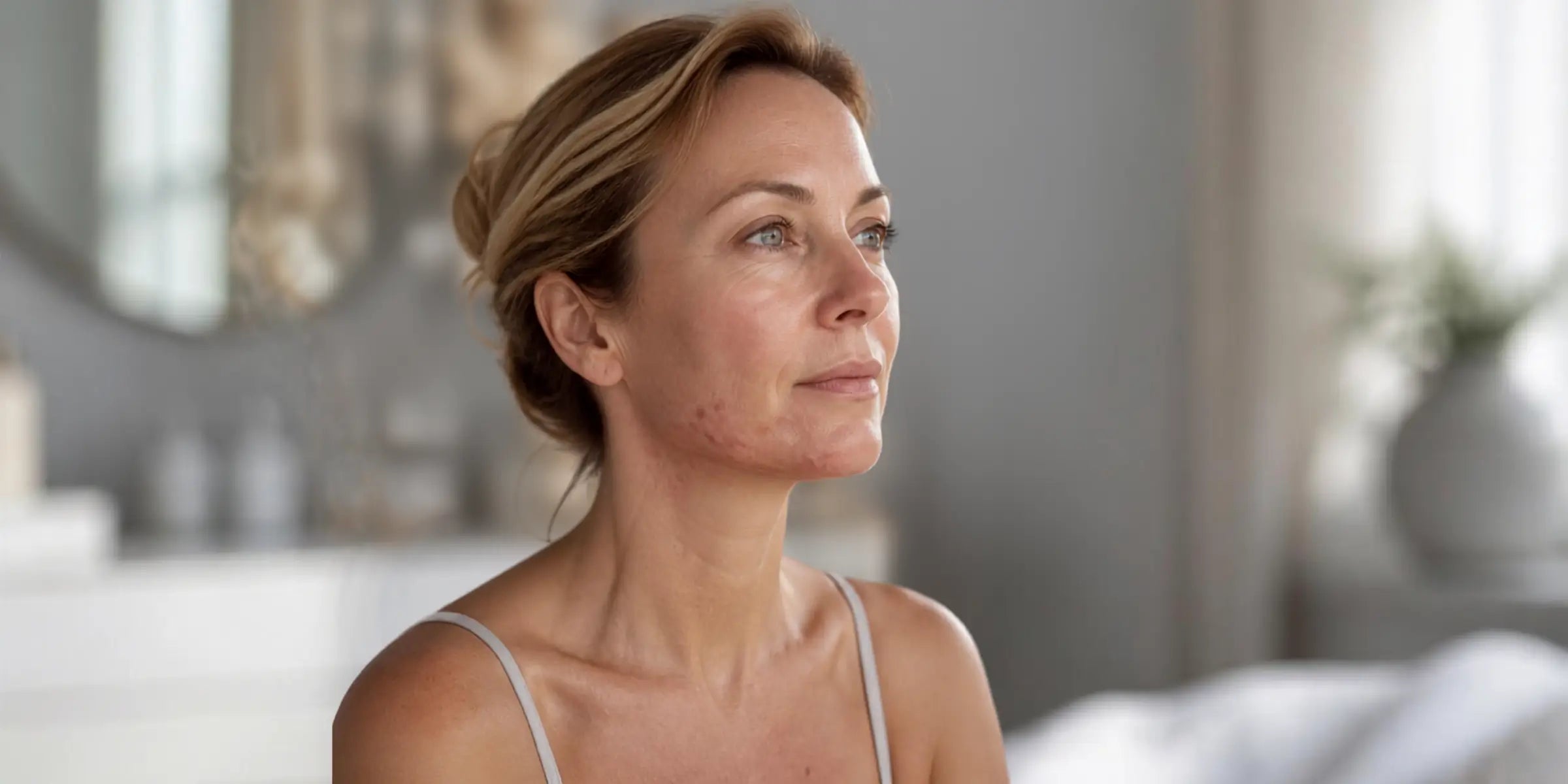
You spent your twenties waiting to age out of breakouts. Now you're in perimenopause, doing everything "right" - serums, a proper cleanse, maybe even LED - and the jawline congestion is back. It's not your imagination, and it's not a failure of your routine. Fluctuating hormones during perimenopause genuinely do trigger adult acne in a lot of women for the first time in decades. But there's a second, quieter factor most routines never account for: what your face presses into for seven-plus hours a night.
Why Perimenopause Triggers Breakouts You Haven't Seen Since Your Teens
As oestrogen levels fluctuate and decline relative to androgens during perimenopause, oil (sebum) production can increase, particularly along the jawline and chin. At the same time, skin's barrier function and cell turnover slow down, meaning congestion clears more slowly than it used to. This combination - more oil, slower turnover - is why so many women in their 40s and 50s are dealing with a type of breakout that looks and behaves differently to teenage acne: deeper, more inflamed, and more stubborn.
This is a hormonal and physiological process, and a pillowcase alone won't resolve it. But your pillowcase is one of the few daily contact points with your skin that's entirely within your control - and most cotton pillowcases are working against you, not with you.

What's Actually Happening on a Cotton Pillowcase
Cotton is porous and absorbent by design - that's what makes it comfortable for general bedding. But it's the wrong property entirely for a surface that sits against actively-treated, oilier skin all night:
- It absorbs your skincare. Serums, oils and actives you've just applied get drawn into the cotton fibres instead of staying on your skin where they're meant to work.
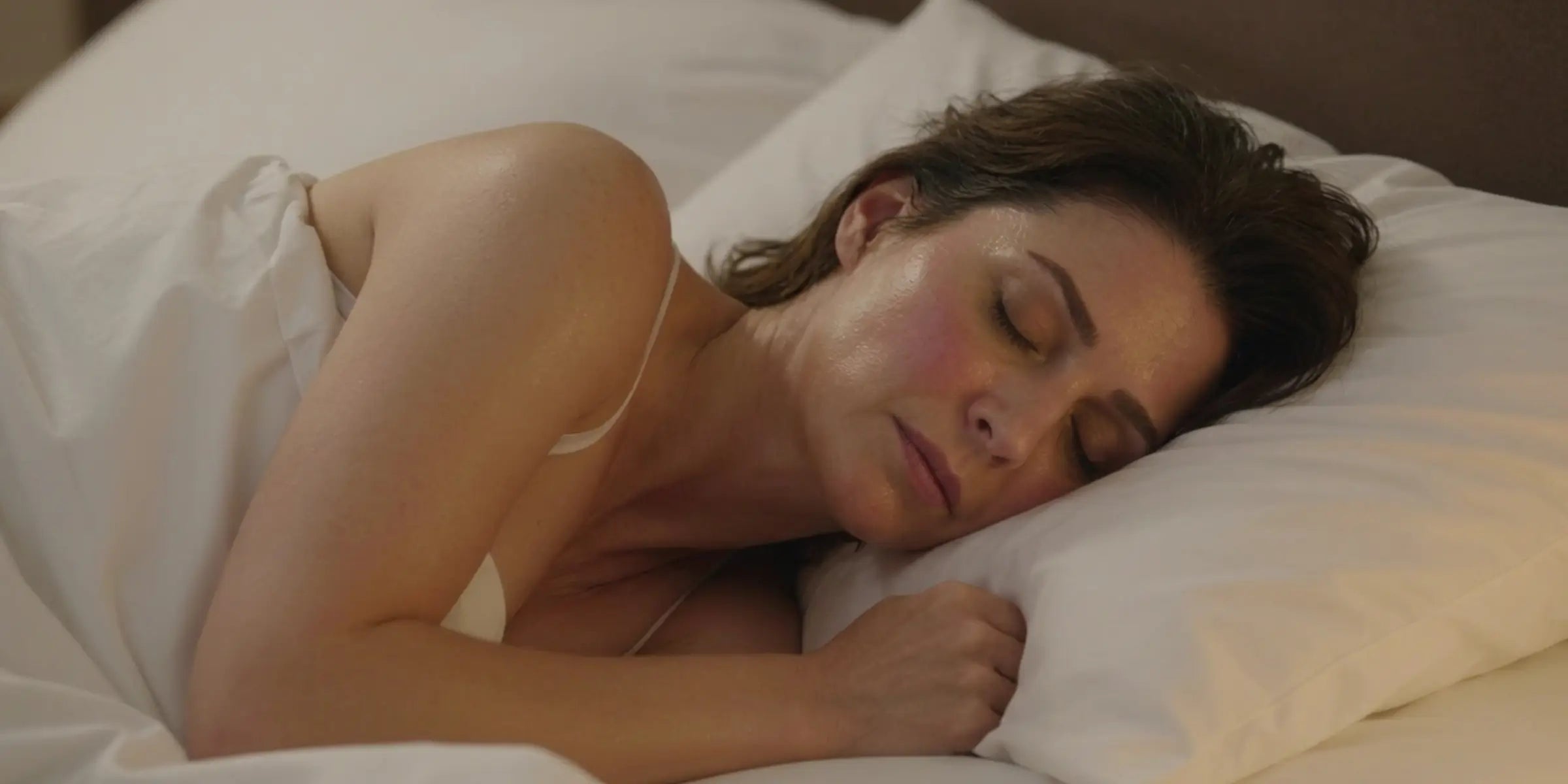
- It holds onto oil and bacteria. Sebum, sweat and product residue sit in the weave between washes, and your face presses back into that same buildup every night.
- It creates friction. Cotton's textured surface drags against skin as you move in your sleep, which can aggravate already-inflamed congestion.
None of this is dramatic on any single night. It's the cumulative effect - the same pillowcase, the same friction, the same absorption, night after night for a week between washes - that adds up.

Where Silk Behaves Differently
Mulberry silk's smooth, tightly woven surface changes the equation in three specific ways:
- Low absorbency. Silk's protein structure doesn't draw in moisture the way cotton does, so more of your night serum stays on your skin instead of soaking into the pillowcase.
- Naturally hypoallergenic and antimicrobial. Silk is naturally resistant to dust mites, mould and bacterial growth, which matters when a surface is being asked to sit against congested skin repeatedly.
- Reduced friction. A smooth 6A grade silk surface glides rather than drags, which means less mechanical irritation on skin that's already inflamed.
None of this replaces a proper skincare routine or dermatological advice for persistent breakouts - silk is a supporting textile, not a treatment. But it removes one of the daily variables working against your skin, quietly, every single night.
Building a Night Routine That Actually Supports Congested, Perimenopausal Skin
If you're already using a copper peptide serum or an LED device as part of managing perimenopausal skin changes, your pillowcase is the final link in that chain - and the one most routines skip entirely:
- Cleanse thoroughly. Congested, oilier skin benefits from a proper double cleanse to remove the day's buildup before anything else goes on.
- Apply targeted serum. Let actives absorb fully before your head hits the pillow - give it a few minutes, not seconds.
- Sleep on silk, not cotton. So the serum stays on your skin rather than in your pillowcase, and the pillowcase itself isn't reintroducing oil and bacteria night after night.
-
Wash your pillowcase weekly. Even silk needs regular washing when it's supporting congested or actively-treated skin - don't assume "hypoallergenic" means "never needs cleaning."
Your skincare routine deserves a pillowcase that works with it, not against it.
Souleir's 6A grade Mulberry Silk Pillowcase is low-absorbency and naturally hypoallergenic - built to sit against actively-treated, perimenopausal skin without undoing what you just applied.
Shop the Mulberry Silk PillowcaseFrequently Asked Questions
Can a silk pillowcase actually help with hormonal acne?
A silk pillowcase won't address the hormonal drivers of perimenopausal acne, but it can support your skin by reducing product absorption into bedding, minimising friction, and offering a naturally hypoallergenic surface - removing one variable that can contribute to ongoing congestion.
Why am I suddenly breaking out in my 40s?
Fluctuating hormone levels during perimenopause can increase oil production and slow skin cell turnover, which commonly leads to jawline and chin congestion — even in women who had clear skin for decades beforehand. This is worth discussing with a GP or dermatologist if it's persistent.
Is silk really more hygienic than cotton for acne-prone skin?
Silk is naturally resistant to dust mites, mould and bacterial growth due to its protein structure, and absorbs less oil and product than cotton. It still requires regular washing, particularly if being used alongside active skincare.
How often should I wash my pillowcase if I have breakouts?
Weekly is a good baseline for congested or actively-treated skin, using a pH-neutral detergent and cool wash to protect both your skin and the silk fibres.
This article discusses general skincare and textile hygiene practices and is not medical advice. Persistent or severe acne should be assessed by a GP or dermatologist, particularly during perimenopause when hormonal changes can require tailored treatment.

Written by Therese C.

Leave a comment
This site is protected by hCaptcha and the hCaptcha Privacy Policy and Terms of Service apply.