

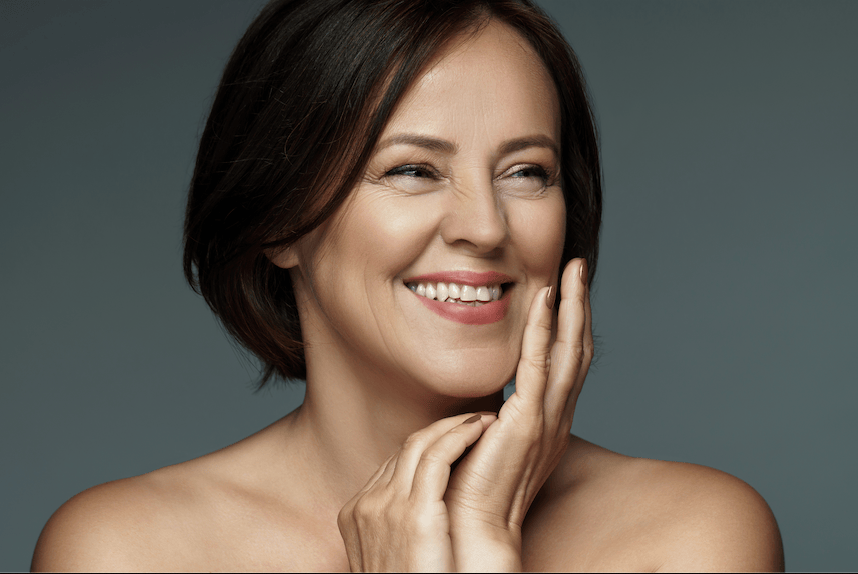
What Happens to Your Skin in Midlife? A Gentle Guide to Perimenopausal Skin Concerns
Perimenopause & Skin · Souleir Journal
In short: During perimenopause, shifting oestrogen levels can affect the skin's collagen support, moisture retention and barrier resilience. This can show up as new dryness, sensitivity, fine lines or dullness — even in women who never had "difficult" skin before. It's a normal, common transition, not a flaw to fix urgently.
If you've noticed your skin behaving differently over the last year or two - tighter after cleansing, reactive to products you've used for years, or just looking a little tired no matter how much you sleep - you're not imagining it, and you're far from alone.
Perimenopause, the transitional years before menopause, typically begins in the mid-to-late 40s (though it can start earlier) and can last anywhere from a few years to closer to a decade. It's a whole-body transition, and skin - being the body's largest organ - tends to notice.
This guide walks through what's commonly reported during this stage, why it happens at a high level, and how to respond to it with a calmer, more supportive routine rather than a reactive one. It's written from a skincare and lifestyle perspective, not a medical one - if you have concerns about your health or hormones, your GP or a menopause-informed specialist is always the right first call.
Why does skin change during perimenopause?
Quick answer: Oestrogen plays a supporting role in skin's collagen production, hydration and thickness. As levels fluctuate and gradually decline through perimenopause, skin can lose some of that support - leading to dryness, thinning, reduced bounce and a slower "recovery" after irritation.
Skin researchers have long noted a link between declining oestrogen and reduced skin collagen content, particularly in the years immediately around menopause. Collagen is part of what gives skin its firmness and cushioning; when its support system shifts, skin can start to feel and look different - often described as "thinner," "crepier," or simply less resilient than before.
At the same time, the skin's natural barrier - the outermost layer responsible for keeping moisture in and irritants out - can become less efficient. That's often the real story behind sudden sensitivity: it's not that your skin has become "difficult," it's that its protective layer needs more support to do its job.
The most common changes women report
Dryness that wasn't there before
Skin that used to be balanced - or even oily - can start to feel tight, flaky, or dull, particularly across the cheeks and around the mouth. This is one of the most frequently reported changes in the perimenopausal years.
New sensitivity or reactivity
Products you've used for years without issue may suddenly cause stinging, redness, or flushing. This is generally linked to a less resilient skin barrier, meaning actives that were once well tolerated now need to be reintroduced more gently.
Fine lines and a loss of bounce
Alongside dryness, many women notice new fine lines, particularly around the eyes and mouth, and a general sense that skin looks less "plump" than it used to - appearance-wise, this is commonly associated with the collagen-related changes mentioned above.
Dullness and uneven tone
A slower cell turnover rate can leave skin looking less radiant, with tone that feels patchier or less even than it once was — even without any change to your actual routine.
Recognise one or two of these? You're not starting from scratch - you're starting from here.
See how Skin Restore LED System supports this stageWhat this means for your routine (without overhauling everything)
Quick answer: The instinct is often to add more products. The more useful approach is usually to simplify - prioritise barrier support, gentle hydration and consistency over trend-chasing or aggressive actives.
It can be tempting, the moment skin starts to change, to reach for something stronger - a higher percentage retinol, a new acid, a "miracle" serum. In our experience, the skin that's coping with change usually responds better to the opposite: fewer, gentler, more considered products, worn consistently, alongside habits that support skin from the outside without overwhelming it.
That's the thinking behind how we've built the Souleir range - an LED light therapy system that supports the skin's appearance without added actives or downtime, a copper peptide serum formulated for a barrier-conscious routine, and a mulberry silk pillowcase that reduces overnight friction on skin that's already more reactive than it used to be. None of these are positioned as treatments for a medical condition - they're simply tools that work well together for skin going through a genuinely different phase.
We'll cover exactly how to build that kind of routine, step by step, in the next article in this series.
TGA registered (ARTG #510468) · Subscribe to receive exclusive member discounts
When to speak to a professional
This guide covers general, appearance-focused skin changes - it isn't a substitute for medical advice, and it isn't designed to diagnose or treat any condition. If you're experiencing symptoms that concern you, including skin changes alongside other perimenopausal symptoms, please speak with your GP or a menopause-informed health professional. Reliable starting points include the Australasian Menopause Society and Jean Hailes for Women's Health, both of which offer independent, evidence-based information on the broader perimenopausal transition.
Frequently asked questions
At what age does perimenopausal skin change usually start?
Most women begin noticing changes in their mid-to-late 40s, though it varies significantly from person to person and can start earlier for some.
Is dry, sensitive skin in your 40s always related to perimenopause?
Not necessarily - skin changes can have many causes. But if the timing lines up with other perimenopausal signs, hormonal shifts are a commonly cited contributing factor worth discussing with a professional if it's concerning you.
Can skincare alone address perimenopausal skin changes?
Skincare can support the skin's appearance, comfort and barrier function, but it isn't a treatment for hormonal changes themselves. A calm, consistent routine is about helping skin look and feel its best through the transition - not reversing the transition itself.
Not ready to shop yet? Start with the next step in this series.
Building a Calm, Barrier-Supporting Routine for Changing Skin - the practical, step-by-step follow-up to this guide.
Read the next guideThis article is general information only and does not constitute medical advice. It has not been reviewed by a medical professional and should not be used to diagnose or treat any condition. Please consult your doctor or a qualified health professional for guidance specific to you.

Written by Therese C.


Leave a comment
This site is protected by hCaptcha and the hCaptcha Privacy Policy and Terms of Service apply.