

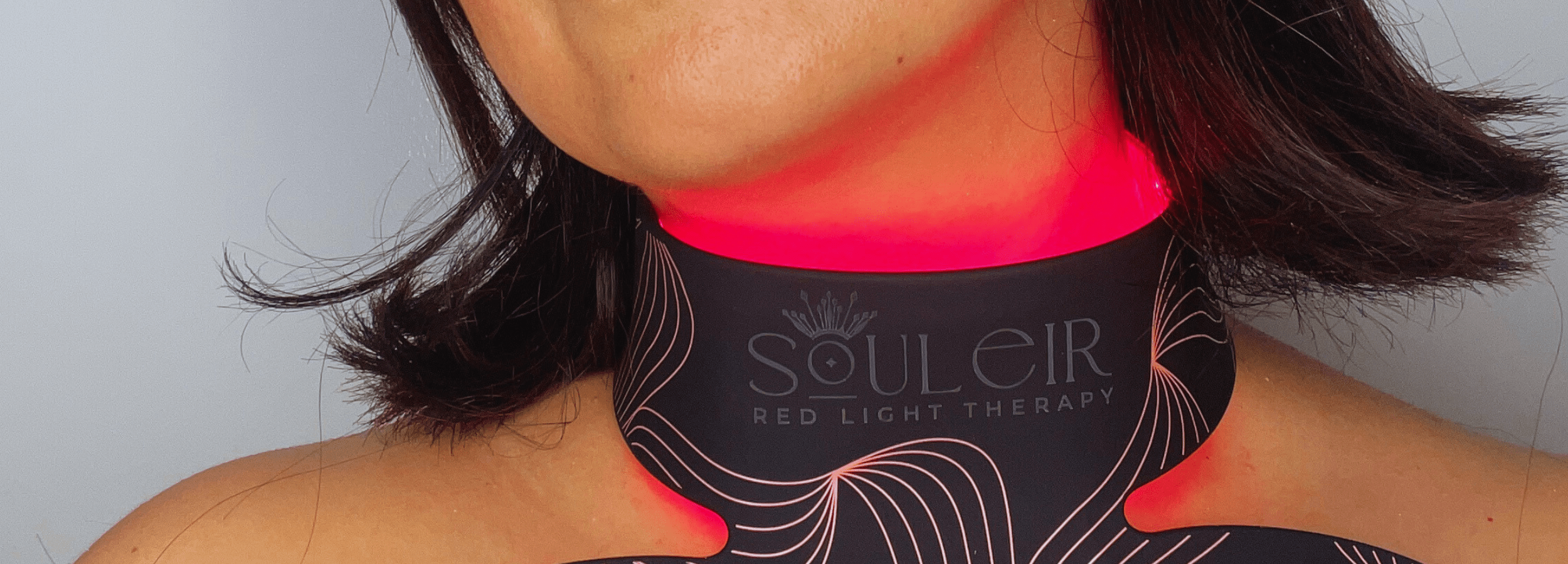
How Often Should You Use Red Light Therapy at Home for Best Results
One of the most common questions after buying an LED therapy device is also one of the least clearly answered: how often should you actually use it?
Too little and you won't see results. Too much and - genuinely - you can reduce their effectiveness. Red light therapy follows a biphasic dose-response curve, which means frequency and duration are not just preferences. They affect outcomes.
Here is the evidence-based answer...
The short answer
For the best results, you should use red light therapy at home 3 to 5 times per week, for 10 to 20 minutes per session. Consistency is more important than duration.
Using an LED mask for 10 minutes daily is significantly more effective than a single 60-minute session once a week. Once you achieve your desired results (typically after 4 to 6 weeks), you can reduce usage to 2 to 3 times per week for maintenance.
Why frequency matters — the cellular mechanic
Red light therapy works by stimulating mitochondria in skin cells, causing them to produce more ATP (cellular energy). This extra energy is used by fibroblasts — the cells that make collagen — to increase production.
This is a biological process, not a cosmetic one. And like all biological processes, it responds to consistent, regular signalling. A single session initiates a cascade of cellular activity, but that activity diminishes within 24–72 hours if not reinforced.

Daily use keeps the signal consistent. Weekly use is like exercising once a week and expecting the same results as someone exercising daily — the mechanism is real, but the dosing is insufficient to produce compounding gains.
Session duration: why 10–20 minutes is the sweet spot
The research on photobiomodulation consistently points to the same treatment window: 10–20 minutes per session, at therapeutic irradiance levels of 30–100 mW/cm².

This is not arbitrary. It reflects the biphasic dose-response principle:
cells absorb light energy and up-regulate their activity up to an optimal point. Beyond that point, further light exposure does not enhance the response — and at excessive doses can begin to inhibit it.
What this means practically:
-
10 minutes is effective for ongoing maintenance and prevention, particularly for women using red light therapy as part of a daily morning or evening routine
-
15–20 minutes is appropriate when addressing specific concerns — active inflammation, rosacea, or accelerated collagen loss during perimenopause
-
Sessions beyond 20 minutes with a well-powered device do not produce proportionally better results and may begin to diminish them
More is not more. Consistent and calibrated is.
Building a protocol that fits your life
The most effective protocol is the one you will actually follow. Here is how to structure it practically:
If your primary goal is anti-ageing and collagen support:
-
15–20 minutes daily
-
Morning or evening — either works, though some users prefer morning for the mild circulation boost it provides
-
On clean, product-free skin before applying serums and moisturiser
-
Results become visible at 6–8 weeks; most significant changes at 12 weeks


If your primary goal is redness reduction and rosacea management:
-
10–15 minutes daily
-
Evening preferred — skin is calmer and less likely to have been exposed to environmental triggers
-
Consistent daily use is particularly important for rosacea, as intermittent use produces inconsistent results
-
Expect reduction in flare frequency before visible skin texture changes — typically 4–6 weeks
Rosacea
|
Dry / Redness
|


If your primary goal is addressing perimenopausal skin changes:
-
15–20 minutes daily
-
The skin changes driven by declining oestrogen are progressive and ongoing — consistent daily use is more important here than for younger skin
-
Pair with a peptide serum applied immediately after each session for complementary collagen support
-
Results compound over months, not weeks — commit to 90 days before evaluating
How long until you see results?
This is the question most people want answered, and the honest answer is: it depends on what you are treating and the current state of your skin.
Typical timeline:
|
Concern |
First visible changes with Souleir Skin Restore Masks |
Significant improvement |
|---|---|---|
|
Redness and rosacea |
2–4 weeks |
8–10 weeks |
|
Fine lines |
2–8 weeks |
12–16 weeks |
|
Skin texture and tone |
2–6 weeks |
10–12 weeks |
|
Collagen density (perimenopausal skin) |
8–10 weeks |
16–20 weeks |
These are averages. Skin with more significant existing damage or collagen loss will take longer to show improvement. Skin that is already well-maintained will often respond faster.
The one consistent finding across the research: the women who see the most significant results are those who use their device consistently for a minimum of 12 weeks without long breaks.
Mistakes that reduce effectiveness
❌ Using it on skin covered in SPF or makeup.
❌ Sunscreen and cosmetics absorb or reflect light. Always use on clean, product-free skin.
❌ Inconsistent use with long gaps.
❌ Missing a week resets some of the cellular signalling you have been building. Occasional missed days are fine. Regular week-long gaps are not.
❌ Using it with retinol or AHAs directly beforehand. Both increase skin photosensitivity. Apply these products after your session, or on alternate evenings.
❌ Storing the device and forgetting it.
✅ The single biggest predictor of results is consistency.
Leave the device somewhere visible in your routine — on your bathroom bench, next to your skincare, somewhere it functions as a reminder.
Combining red light therapy with your existing routine
LED light therapy performs best as the first step in your evening or morning routine — before serums, actives, and moisturiser. The sequence:
-
Cleanse and thoroughly dry skin
-
LED therapy session (10–20 minutes)
-
Apply vitamin C, peptides, or hyaluronic acid serums (skin is primed to absorb)
-
Moisturise
-
SPF in the morning
It does not need to replace anything in your routine. It works best as an addition — treating the skin at a cellular level while your topicals support the surface.

About the Souleir Youth Restore LED Therapy Mask
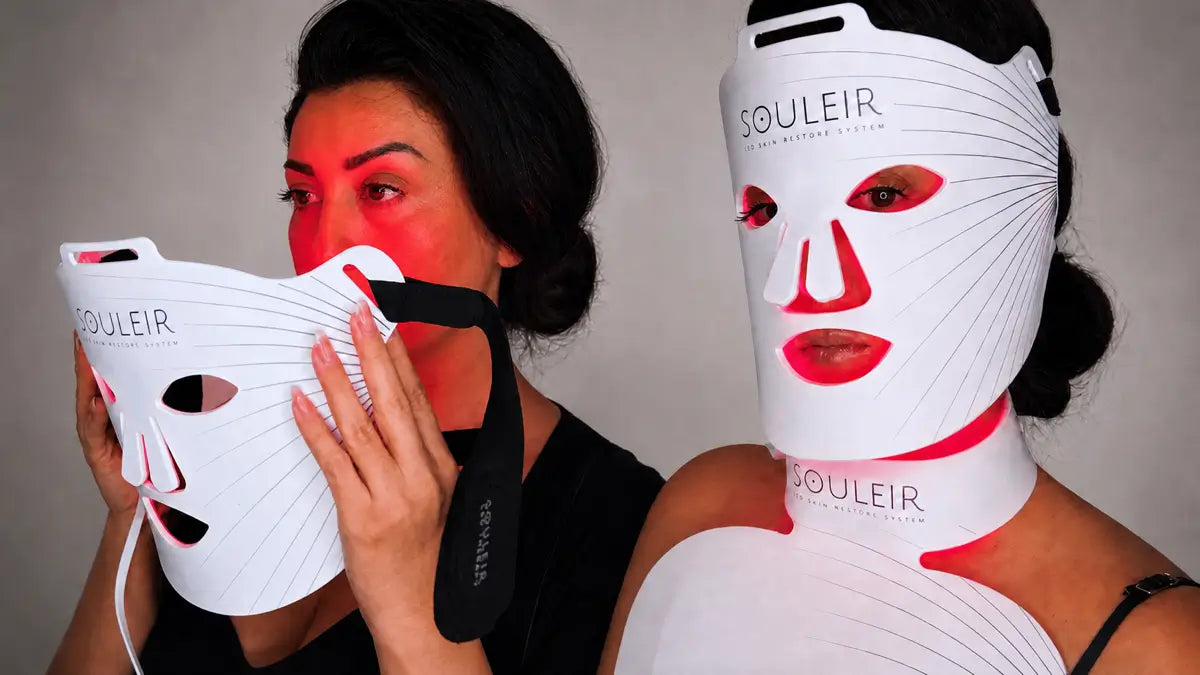
✅ Designed and medically certified for daily use at home.
✅ TGA-approved,
✅ 4-in-1 LED chip technology across four wavelengths,
✅ 10 minute sessions with automatic timer.
✅ Flexible food-grade silicone ensures consistent full-face, neck, and décolletage coverage — because surface contact directly affects how much light your skin actually receives.
The protocol is simple. The commitment is daily. The results compound over time.
Shop the Souleir Skin Restore LED Therapy Mask →
This article is for informational purposes only and does not constitute medical advice. Individual results will vary based on skin type, age, condition, and consistency of use.

Written by Therese Cassar

Leave a comment
This site is protected by hCaptcha and the hCaptcha Privacy Policy and Terms of Service apply.